
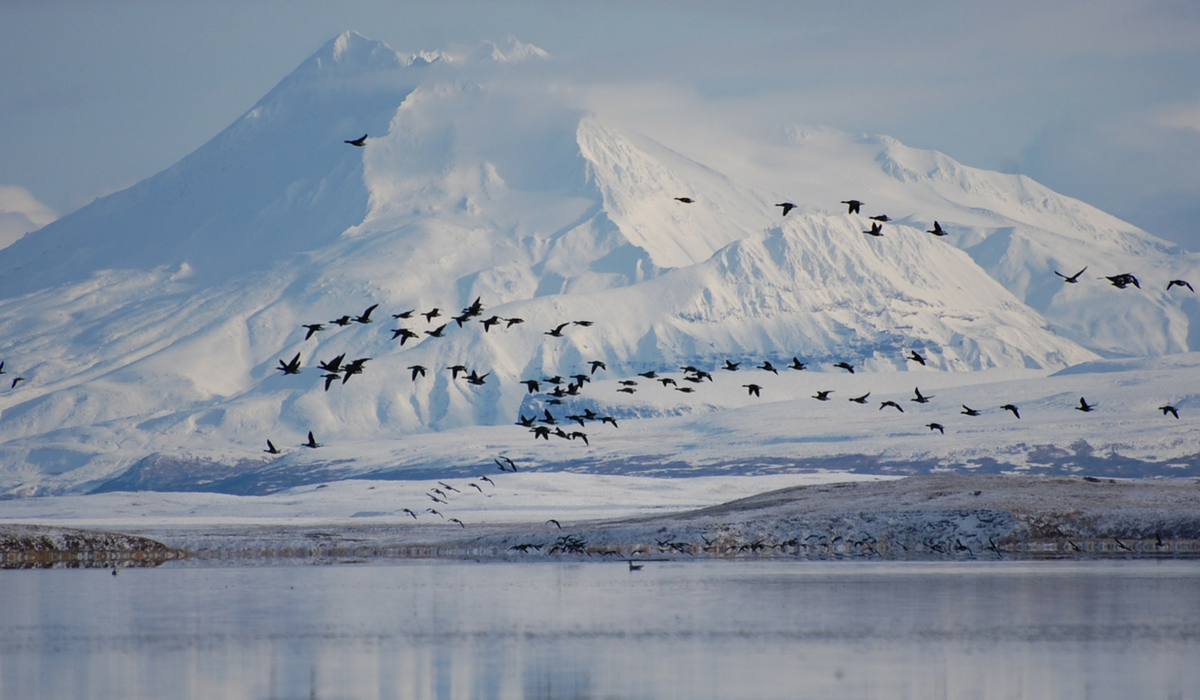
The Izembek National Wildlife Refuge lies along the Bering Sea side of the Alaska Peninsula. Izembek is an amazingly important migration stopover for many birds migrating to and from Arctic breeding grounds and is part of the globally significant Izembek-Moffet-Kinzarof Lagoons Important Bird Area.
The U.S. Fish and Wildlife Service established Izembek’s 498,000 acres as "a refuge, breeding ground, and management area for all forms of wildlife" in 1960. In 1972, Izembek Lagoon was protected through the Alaska Submerged Lands Act and became the Izembek State Game Refuge. In 1980, 315,000 of its 330,000 acres were designated as Wilderness (making the area off-limits to vehicles) under the Alaska National Interest Lands Conservation Act (ANILCA). In 1986, Izembek Lagoon was one of the first U.S. sites to be named a Wetland of International Importance under the Ramsar Convention on Wetlands.
The presence of large eelgrass beds (a type of aquatic marine vegetation) makes this site one of the most important migratory bird staging and wintering habitats in the world. Izembek regularly supports more than 90% of Brant that use the Pacific Flyway. Essentially the entire Pacific Brant population stops in Izembek to refuel. What’s more, in today’s warmer climate, about 30% of the Brant are remaining at Izembek for the winter, with an increasing trend over time, making Izembek ever more important for this species.
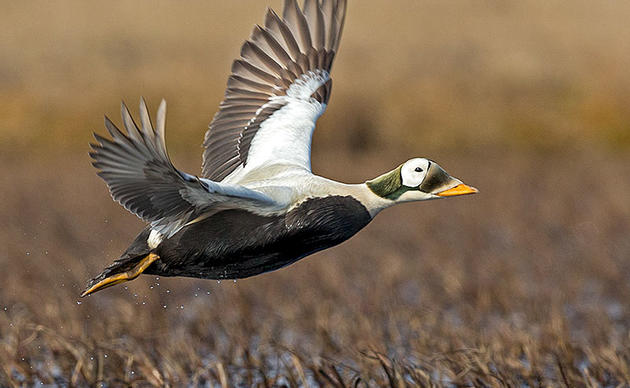
Izembek also supports more than half the world population of Emperor Geese and a significant percentage of the world population of Steller's Eider and Taverner's Cackling Goose. There are also Tundra Swans, ptarmigan, and Bald Eagles. And Izembek’s cold-water lagoons and internationally significant wetlands are also critically important resting places for migrating waterfowl. Overall, more than 82 bird species have been documented here as well as mammals like caribou, brown bears, wolves, and wolverines.
Izembek has been under threat from a proposed road for decades. Audubon has often helped defend this vital habitat, including on January 31, 2018, when Audubon and eight other parties sued the Department of the Interior for a questionable land transfer agreement. The lawsuit argued that the agreement violates sections of ANILCA. The court agreed and on March 29, 2018, held that the Department of the Interior failed to explain its decision to enter the Exchange Agreement with King Cove in light of its previous decision that alternatives to a road exist and that a road would cause significant environmental harm. The federal court's decision vacated the land exchange. The decision was a big win for the birds and other wildlife in Izembek National Wildlife Refuge.
Here’s more information on how building a road through Izembek's wilderness and wetlands would sacrifice key habitats and significantly long-term degrade bird and wilderness values.
Downloadable Resources

Protect the Ancient Trees of the Tongass National Forest
Tell the U.S. Forest Service and the USDA to halt the removal of protections for the Tongass National Forest and include Tribal Governments in a new rule-making process.

How you can help, right now
Donate to Audubon
Help secure the future for birds at risk from climate change, habitat loss and other threats. Your support will power our science, education, advocacy and on-the-ground conservation efforts.
1% for the Planet
We are proud to be part of the 1% for the Planet network. If you own a business, please consider joining 1% for the Planet to support Audubon Alaska’s conservation efforts.