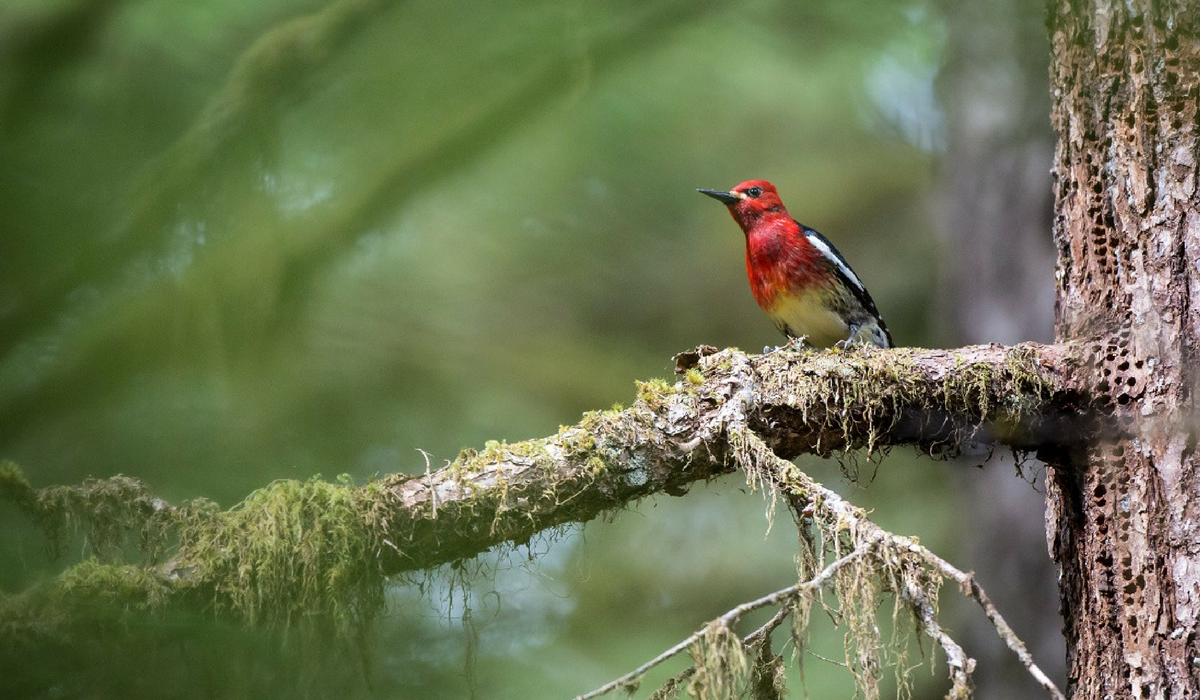
The Tongass National Forest in Southeast Alaska is our nation’s largest national forest, nearly 17 million acres in size. It is home to the Tlingit, Haida, and Tshimsian Peoples. In combination with British Columbia's Great Bear Rainforest immediately to the south, the region encompasses the largest intact temperate rainforest on earth. Stretching 500 miles north-to-south, the Tongass is an island archipelago of countless streams, glacial fjords, and lush valleys backing into spectacularly rugged mountains and sprawling forests of majestic, old-growth cedar, spruce, and hemlock trees. The Tongass also supports abundant fish and wildlife, including all five species of Pacific salmon, brown (grizzly) bears, wolves, Sitka black-tailed deer, Bald Eagles, Northern Goshawks, and Marbled Murrelets.
Logging over the last century, however, has changed the Tongass, particularly by targeting the rare, old-growth forest stands with the biggest trees. Over half of the large-tree forests have been logged, and some islands have no remaining old-growth forest left after decades of industrial-scale clearcut logging. The southern half of the Tongass has lost over two-thirds of its old-growth forests. Yet these same, productive stands are also the most important for fish, wildlife, and ecosystem integrity.
While the Tongass still boasts healthy populations of fish and wildlife, many of its most important places are still at risk. Conservation is at a critical juncture. The U.S. Forest Service continues to focus on old-growth timber harvest within the remaining intact watersheds. These watersheds feed the rich estuaries that provide nutrients for marine mammals, and millions of seabirds, and provide a crucial link between the marine and terrestrial environments of the Tongass.
The Tongass National Forest provides us with the greatest opportunity in the nation, if not the world, for protecting temperate rainforest at the ecosystem scale, in the face of climate change. It sequesters more carbon than any other type of forest on Earth, providing a much-needed opportunity for climate solutions that can simultaneously bolster regional economies. Our work to protect the Tongass focuses on the intersection of place, people, and the need for policy that protects this incredible rainforest for the future.
The Southeast Alaska Birding Trail was created in 2017 as a collaboration between Audubon Alaska, the Juneau Audubon Society, and the U.S. Forest Service. The virtual Southeast Alaska Birding Trail guides expert birders and casual visitors alike to nearly 200 birding sites across 18 communities while spotlighting the diverse bird and wildlife species, landscapes, and ecosystems of the Tongass, Chilkat Valley, and beyond. Now with the mobile application launched in 2023, travelers of the Southeast Alaska Birding Trail may explore everything the trail has to offer conveniently from a mobile device. After downloading from the Apple Store or Google Play, participants will open the app and be prompted to download the mobile map package which initiates maps, site details and directions, species checklists, and more regardless of internet connection or cell service. The trail and app were designed to foster sustainable economic development built around the bioregion and highlight how birding tourism opportunities can strengthen economies while assisting in the shift away from resource extraction.
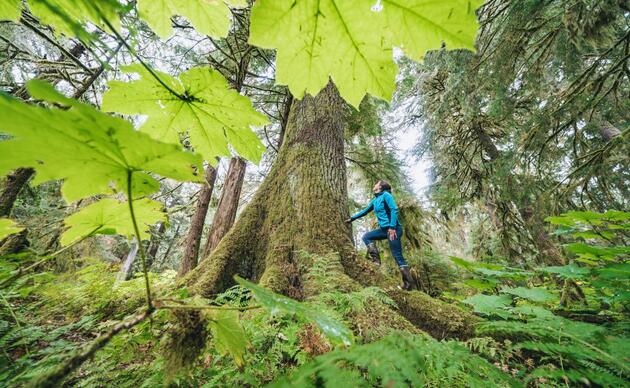
Understory: a journey into the Tongass
Film screening March 17-19! Watch the film then join us for a discussion about the film, the Tonagss, and climate change on March 19.
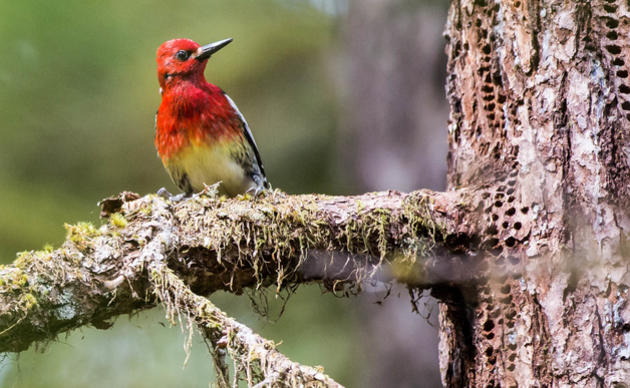
Tongass Defense Fund
Help defend the towering old-growth trees of the Tongass National Forest from clearcutting.
Learn More
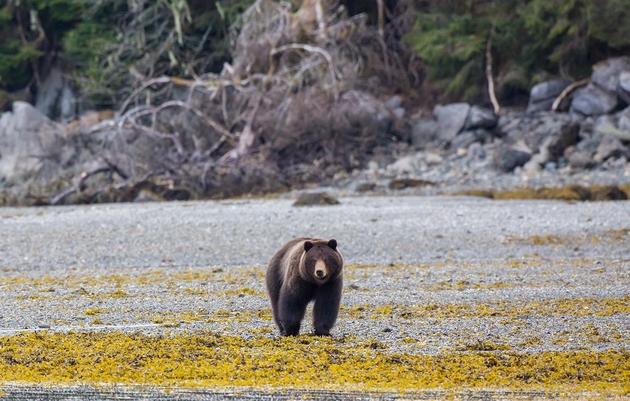
Ecological Atlas of Southeast Alaska
This Atlas explores the geography, wildlife habitat, and human uses of Southeast Alaska.
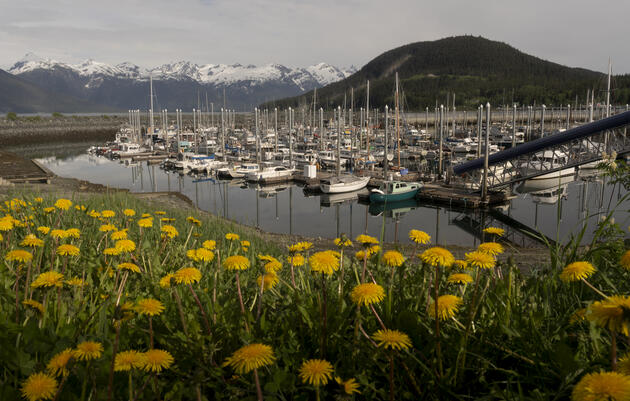
Southeast Alaska Birding Trail
Southeast Alaska is a fantastic place to go birding. Explore the area using this virtual trail as your guide.
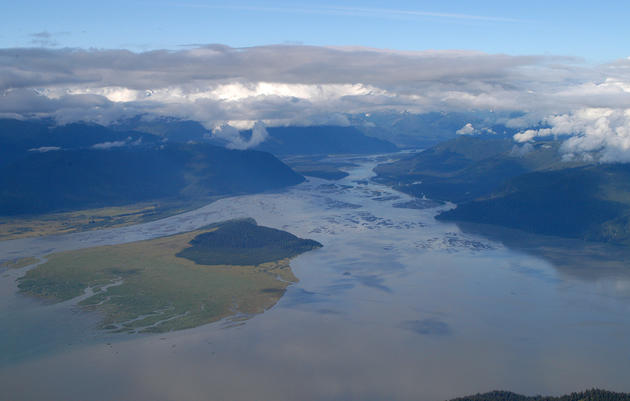
Using the Southeast Alaska Birding Trail Website
The Southeast Alaska Birding Trail website is a great tool for planning your next birding adventure. Learn how to navigate the site and discover all it has to offer.
How you can help, right now
Donate to Audubon
Help secure the future for birds at risk from climate change, habitat loss and other threats. Your support will power our science, education, advocacy and on-the-ground conservation efforts.
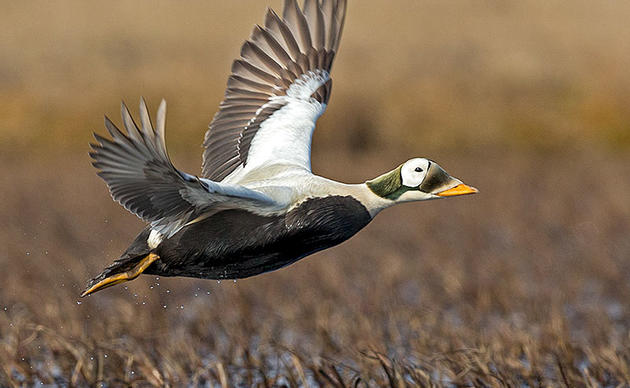
1% for the Planet
We are proud to be part of the 1% for the Planet network. If you own a business, please consider joining 1% for the Planet to support Audubon Alaska’s conservation efforts.